


 Gemstone
  Candle Arts
  Accessories Art
  Jewellery Art
 English



Nutrition-Related Food: A Complete Guide to a Healthy & Balanced Diet
 By Artishbaazi Sher Sharaba3 weeks ago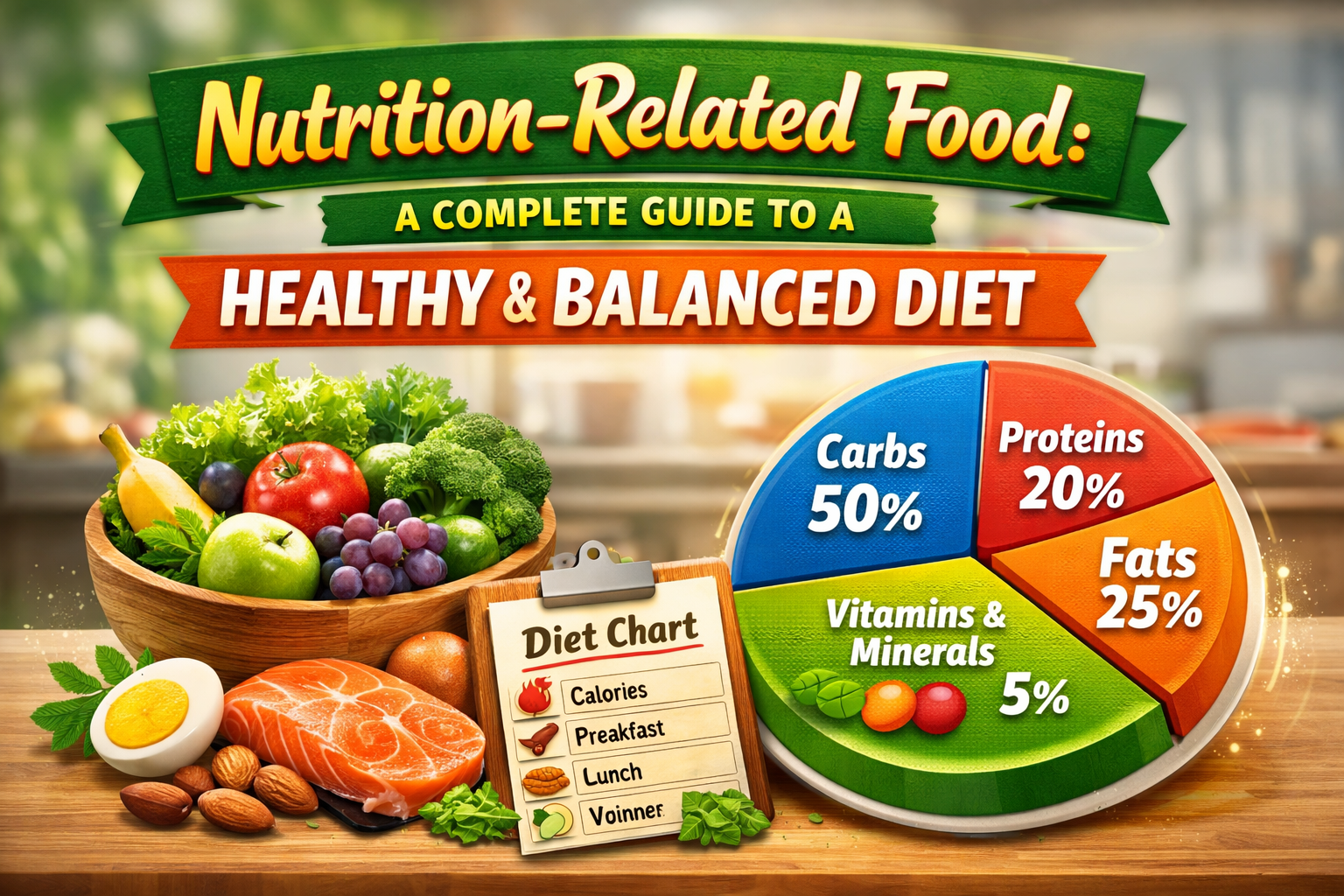
Nutrition-Related Food: A Complete Guide to a Healthy & Balanced Diet

🌱 Introduction to Nutrition
Nutrition is the science of food and its relationship with health. Proper nutrition provides the body with energy, supports growth, repairs tissues, and strengthens immunity. A balanced diet includes the right proportion of macronutrients (carbohydrates, proteins, fats) and micronutrients (vitamins and minerals), along with water and fiber.
🔥 Calories: The Energy Unit
Calories measure the amount of energy food provides.
- Too many calories → weight gain
- Too few calories → weakness & nutrient deficiency
Average Daily Calorie Requirement:
- Men: 2200–2500 kcal/day
- Women: 1800–2200 kcal/day
- Children: 1200–1800 kcal/day
🧬 Macronutrients (Main Nutrients)
🍞 1. Carbohydrates (45–60%)
Main energy source of the body
Sources:
Rice, wheat, oats, fruits, potatoes, vegetables
Calories: 4 kcal per gram

🍗 2. Proteins (15–25%)
Builds muscles, repairs tissues, boosts immunity
Sources:
Eggs, milk, pulses, lentils, chicken, fish, nuts
Calories: 4 kcal per gram
🥑 3. Fats (20–30%)
Supports brain health, hormones & vitamin absorption
Healthy Sources:
Nuts, seeds, olive oil, ghee, avocado
Calories: 9 kcal per gram
🍊 Micronutrients (Protective Nutrients)
🟡 Vitamins
- Vitamin A: Vision & skin (Carrot, spinach)
- Vitamin B: Energy metabolism (Whole grains)
- Vitamin C: Immunity (Citrus fruits)
- Vitamin D: Bone health (Sunlight, milk)
- Vitamin E & K: Cell protection & blood clotting
⚙️ Minerals
- Calcium: Strong bones (Milk, curd)
- Iron: Hemoglobin (Green leafy vegetables)
- Potassium: Muscle function (Banana)
- Zinc: Immunity (Seeds, nuts)

💧 Water & Fiber (Often Ignored but Essential)
🚰 Water
- Regulates body temperature
- Removes toxins
- Recommended: 2.5–3 liters/day
🌾 Dietary Fiber
- Improves digestion
- Prevents constipation
- Helps weight control
Sources: Fruits, vegetables, whole grains
🟠 Balanced Diet – Nutrient Distribution (Pie Chart Explanation)
A healthy plate should look like this:
- Carbohydrates: 50%
- Proteins: 20%
- Fats: 25%
- Vitamins & Minerals: 5%
(This is represented visually in the colored pie chart above.)
📊 Nutrition Table (Per Day Approximation)
| Nutrient | Required Amount | Main Sources |
|---|---|---|
| Calories | 2000–2500 kcal | Whole diet |
| Carbohydrates | 250–300 g | Rice, wheat |
| Proteins | 50–70 g | Eggs, pulses |
| Fats | 60–80 g | Nuts, oils |
| Fiber | 25–35 g | Fruits, veggies |
| Water | 2.5–3 L | Water, fluids |
📅 Sample Daily Diet Chart
| Time | Meal |
|---|---|
| Morning | Warm water + fruits |
| Breakfast | Oats / Eggs + Milk |
| Mid-Morning | Fruit / Nuts |
| Lunch | Roti/Rice + Dal + Veg + Curd |
| Evening | Sprouts / Green tea |
| Dinner | Light meal (Roti + Veg) |
| Night | Turmeric milk (optional) |
🏁 Conclusion: Eat Smart, Live Strong
Nutrition is the foundation of a healthy life. A balanced diet rich in carbohydrates for energy, proteins for strength, fats for brain health, and vitamins & minerals for protection keeps the body fit and disease-free. Combine proper nutrition with hydration, physical activity, and regular eating habits to achieve long-term wellness.
“Let food be your medicine and nutrition your strength.”
Categories
 All Items 4
 Home Decor 10
 Digital Art 6
 Poetry Arts 6
 Books 5
 Handcrafts 4
 Paintings & Drawings 5
 Bookmarks 5
 Song Scripts 2
 Miniatures 8
Trending Now